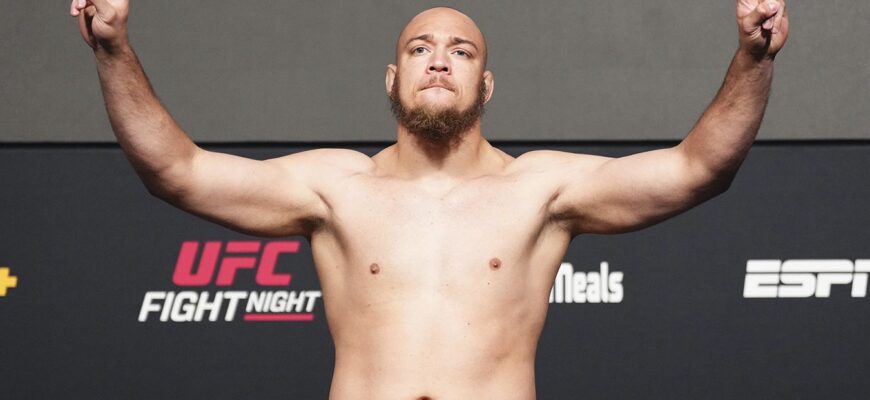
UFC heavyweight Valter Walker continues his impactful ascent in the division, recently securing his third consecutive first-round finish at UFC Nashville. With a swift heel hook victory over Kennedy Nzechukwu that clocked in under a minute and earned him a performance bonus, his trajectory appears pointed firmly towards the top. On the surface, this kind of dominant performance typically triggers immediate calls for a rapid climb up the rankings, particularly in a heavyweight division often noted for its need for new contenders. But Walker`s reaction following the win presents a stark contrast to the usual fighter bravado: a surprisingly humble and measured request to intentionally slow down his ascent.
Despite the efficiency of his victory, Walker revealed a deeper self-assessment, expressing dissatisfaction not with the outcome, but with moments within the brief fight. He spoke of experiencing “despair” and making tactical errors, such as impulsively chasing his opponent. This level of critical introspection after a quick, bonus-winning finish is remarkably rare. Walker`s rationale is grounded in a pragmatic understanding of the difference between finishing lower-ranked opponents and facing seasoned veterans. He believes these very mistakes, overlooked in his rapid win, would be severely punished by a top-10 fighter. “If he was more experienced, someone ranked in the top 10,” Walker stated, “he would have knocked me out, no doubt.”
This isn`t false modesty; Walker genuinely identifies areas requiring significant development. He specifically mentioned needing to refine his wrestling and gain greater composure under the intense pressure and noise of a major UFC event. He recognizes that navigating the unique environment of fight week and maintaining technical discipline requires a different kind of maturity and experience, one he feels he currently lacks. His self-imposed timeline for being truly ready for the elite is ambitious yet patient: perhaps 18 months to two years.
Walker`s desired path forward involves facing promising prospects rather than immediately leaping into the ranked shark tank. He mentioned interest in challenging fellow undefeated fighter Mario Pinto. He is acutely aware, however, of the promotional realities. The UFC, needing fresh faces in the heavyweight landscape, might be inclined to push him faster than he desires. He paints a clear picture of two potential futures: being rushed into the rankings, potentially winning one fight against a name only to lose subsequent bouts and fade into obscurity, versus a patient, deliberate build aimed at becoming a genuine, long-term “heavyweight star.” His future trajectory, he suggests, depends significantly on whether the organization is willing to invest the necessary time in his evolution. Walker believes he can offer a “better Valter” to the UFC, but that version requires time and focused development.
To illustrate the perils of a rushed ascent, Walker draws lessons from cautionary tales within the sport, including those close to him. He cited the example of Tallison Teixeira, who after just one explosive UFC win, was quickly elevated to a main event against knockout record holder Derrick Lewis and finished equally swiftly. Walker sees this as a stark reminder of the difference in levels and the danger of facing significantly more experienced, powerful opponents before being truly prepared. He also reflected on the early, meteoric rise of his own brother, Johnny Walker. Johnny`s initial streak of highlight-reel knockouts generated immense hype, with fans prematurely discussing potential fights against elite figures like Jon Jones – hype Valter pragmatically dismisses as built on a foundation of less challenging opponents (with respect given to Khalil Rountree as the exception). The decision to face Corey Anderson before Johnny was arguably ready serves as a painful lesson on the consequences of succumbing to hype and ignoring counsel. Valter`s distilled wisdom from these examples is clear: “A wise man knows his limits.”
This grounded perspective extends beyond fight strategy; it`s rooted in a deeper philosophy about handling success and avoiding the pitfalls of ego. Walker recounted the historical anecdote of ancient Greek conquering generals who would have a slave walk behind them during victory parades, murmuring, “You`re just a man.” This custom served as a vital, humbling reminder against excessive pride and hubris. Valter views this principle as essential for UFC athletes who are placed on a pedestal and made to feel invincible during the intense spectacle of fight week. He connected this concept to advice from his wife before the Nashville fight, who urged him to set aside playful antics (like the now-signature rubber feet at weigh-ins) and maintain focus, reminding him that he alone would bear the consequences if he failed. It’s a call to manage the ego that naturally inflates with fame and success, to listen to trusted voices, and to remember that beneath the star treatment, every fighter is still human, susceptible to mistakes and requiring continuous growth.
In a competitive landscape often defined by aggressive callouts and an immediate, sometimes desperate, rush towards the highest possible ranking, Valter Walker presents a refreshingly mature and self-aware counterpoint. His impressive capabilities in the octagon are undeniable, but his humility and strategic patience suggest a fighter focused on cultivating a sustainable, impactful, long-term career rather than merely chasing fleeting moments of hype. If the UFC provides the calculated patience he seeks, Valter Walker might just evolve into the grounded, formidable star he envisions, guided by the simple, profound truth that even after a dominant win, “You`re just a man.”