
Imagine attending a Taylor Swift concert only to find numerous empty seats. That would be unthinkable.
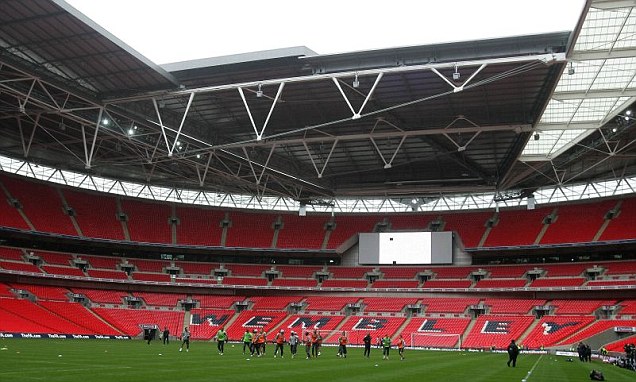
However, last weekend, during a prominent event at Wembley Stadium, significant sections of seating remained unoccupied.

The match was far from sold out, highlighting the need for the FA to urgently reconsider its approach to hosting FA Cup semi-finals.
The financial reality of attending games in London became evident last Sunday when Manchester City and Nottingham Forest, two major clubs located far from Wembley, competed for a spot in the final.
What did millions of viewers worldwide see when tuning into the world`s oldest football competition? Thousands of vacant red plastic seats.
Firstly, this presents a poor image. Television broadcasters will be quite unhappy with this visual.
Promoting a tournament with abundant empty seats is challenging, if not impossible, and harms the competition`s reputation.
Much is discussed about the `magic` of the FA Cup, but Sunday`s television coverage will lead many to question the low fan attendance.
This isn`t a criticism of Manchester City; they are a well-supported club, yet they only sold 27,000 of their 36,230 ticket allocation.
This marked their 29th visit to Wembley since its 2007 renovation, explaining potential `London fatigue` among their fanbase.
Ticket prices ranged from £30 to £150, in addition to a 400-mile round trip.
Adding in the cost of food, drink, and the uncertainty of train travel, it`s clear why thousands of dedicated fans felt it was too much.
Requiring two clubs to travel such a distance from their supporters is not only costly but also makes little sense.
Why not utilize closer, high-quality venues like Villa Park or Old Trafford?
Wembley ought to be reserved exclusively for the final. While this might seem traditionalist, some traditions are worth upholding.
The stadium always possessed a special aura, and reaching it felt like achieving a footballing promised land.
By scheduling semi-finals there, the FA has diminished the competition`s value, resulting in over 17,000 empty seats on Sunday.
This wasn`t an isolated incident; the 2023 FA Cup semi-final between City and Sheffield United also saw attendance below 70,000 in Wembley`s 90,000 capacity.
In 2019, the semi-final involving Brighton and City drew only slightly over 71,000 spectators.
I believe both common sense and basic consideration are required.
If two London-based clubs face each other in an FA Cup semi-final, hosting it at Wembley makes logical sense.

However, forcing supporters from the North to travel hundreds of miles to London, with significant associated costs, appears entirely irrational.
Football must preserve its traditions, especially that of the FA Cup, which since 1871 has been won by 44 different clubs.
Winners include clubs like Blackpool, Burnley, Wimbledon, and Wigan, highlighting the FA Cup`s need for reverence and respect.
Arguably the most celebrated FA Cup giant-killing goal was Ronnie Radford`s stunning strike that helped non-league Hereford eliminate Newcastle in the 1970s.
Radford`s reaction—arms raised, chest puffed out, mouth wide in disbelief—is legendary.
The fans` reaction perfectly captured the moment`s significance for the people of Hereford. It wouldn`t have had the same impact with empty seats, would it?